IS 18256:2023 Certified4mm to 32mm DiametersDelivered Across 6 StatesManufactured in Surat GujaratZero Corrosion — 100 Year LifeFor Creators Who Build LegacyExport Ready — UAE & GulfNABL Certified TestsIS 18256:2023 Certified4mm to 32mm DiametersDelivered Across 6 StatesManufactured in Surat GujaratZero Corrosion — 100 Year LifeFor Creators Who Build LegacyExport Ready — UAE & GulfNABL Certified Tests
Home›Blog›GFRP Rebar for Sewage Treatment Plants in India — Why S...
GFRP Sewage Treatment
GFRP Rebar for Sewage Treatment Plants in India — Why Steel Fails Within 5 Years
✍ RN Elements Team📅 April 2026⏱ 3 min read📖 204 words
Why Steel Rebar Fails in Sewage Treatment Plants
Sewage treatment plants (STPs) are among the most corrosive environments on earth for steel reinforcement.
The Corrosion Mechanisms in STPs
H2S Attack
Anaerobic bacteria in sewage produce hydrogen sulphide gas. H2S reacts with moisture to form sulphuric acid, which attacks both concrete and steel rebar directly.
Chloride Penetration
Municipal wastewater contains chlorides from household detergents, water softeners, and industrial discharge.
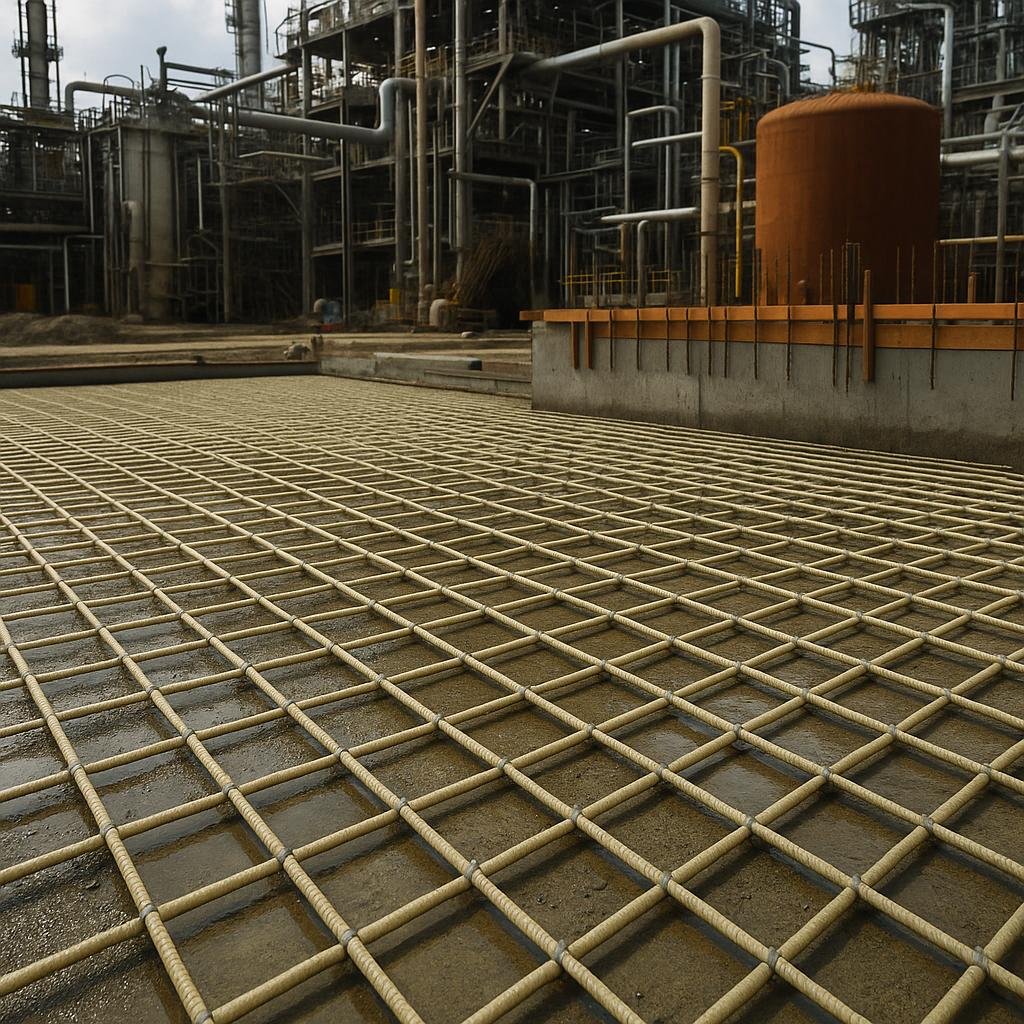
GFRP rebar is chemically inert. It does not react with H2S, chlorides, sulphuric acid, or any aggressive agents in an STP environment.
Zero corrosion — immune to all chemicals in sewage environments
100+ year service life — no maintenance cycles for rebar-related repair
Lightweight — easier handling in confined STP structures
Non-magnetic — no interference with flow meters and sensors
IS 18256:2023 compliant — specification ready for government projects
Conclusion
For any government or private STP project, GFRP rebar is the only rational engineering decision when lifecycle cost is considered. RN Elements manufactures IS 18256:2023 compliant GFRP rebar in Surat, Gujarat.
🏭
RN Elements Technical Team
Written by the engineering and manufacturing team at RN Elements LLP — India's GFRP rebar manufacturer based in Surat, Gujarat. We produce IS 18256:2023 compliant GFRP rebar using pultrusion technology.
RN Elements manufactures GFRP rebar in diameters from 4mm to 32mm — covering 4, 6, 8, 10, 12, 16, 20, 25, and 32mm. Standard lengths are 6m and 12m with custom lengths available.
Yes. Every order is supplied with NABL-accredited third-party test reports confirming compliance with IS 18256:2023 on tensile strength, modulus, alkaline retention, and bond strength.
RN Elements is based at Hojiwala Industrial Estate, Surat, Gujarat. We deliver across India and export to UAE and the Gulf. Gujarat projects get 3–5 day lead time for stock items.
Yes. With IS 18256:2023 and IRC 37 compliance, GFRP rebar can be specified on NHAI, PWD, and other government projects. We provide full documentation for government procurement.
Design service life is 75–100 years in normal concrete environments. International field studies on 30+ year old specimens show no significant degradation, confirming long-term durability.
For Creators Who Build Legacy.
GFRP rebar from Surat, Gujarat. 4mm–32mm. IS 18256:2023. Delivered across India.