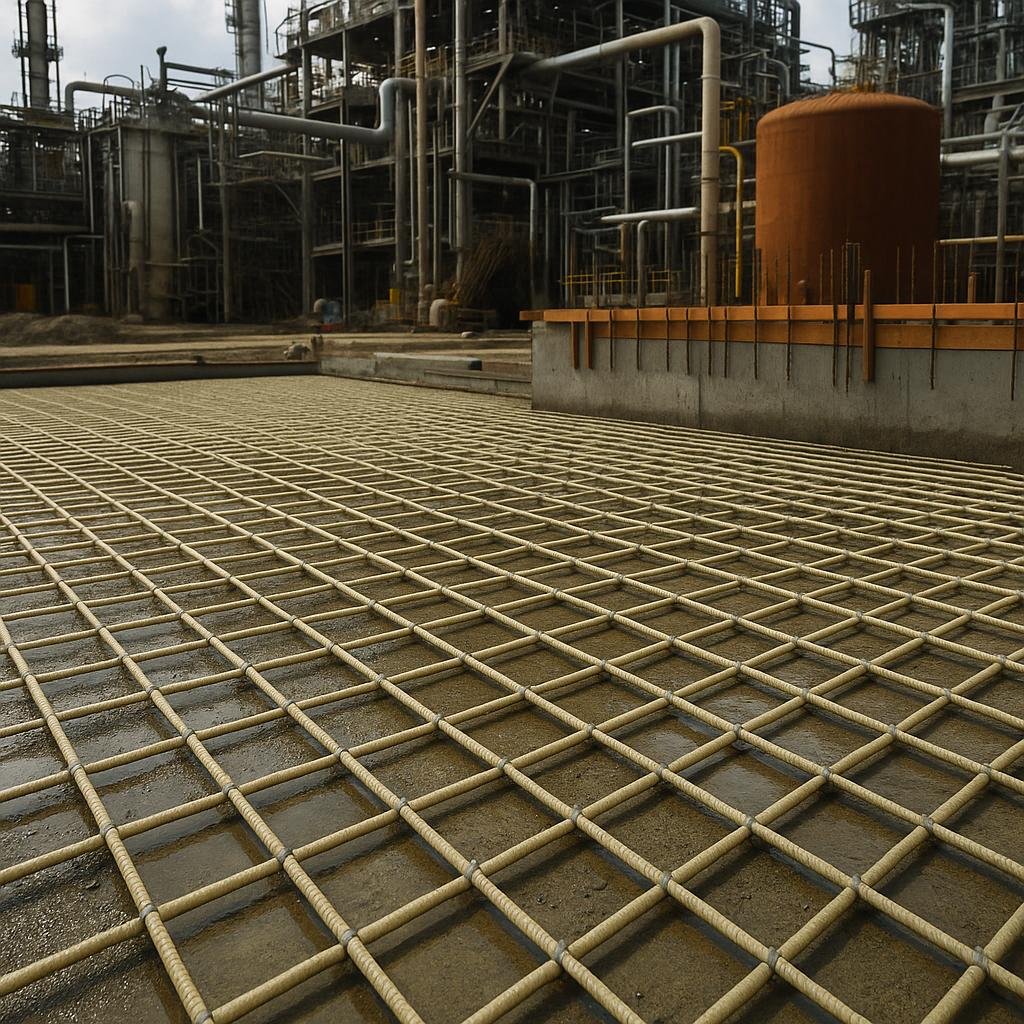
GFRP Rebar for Solar Panel Foundations — Lightweight, Non-Magnetic and Built to Last
India is on a mission to become a solar energy superpower. With thousands of megawatts of solar capacity being installed every year, the demand for reliable solar infrastructure has never been higher.
But here is a question most solar developers never ask: What rebar is inside your solar panel foundations?
The answer matters more than you think.
☀️ Why Solar Projects Need Special Attention for Rebar
Solar farms are typically built in:
- Open fields exposed to rain, heat, and humidity
- Coastal or desert areas with extreme weather
- Rooftops where weight is a critical concern
In all these environments, steel rebar quietly corrodes over 10–15 years — weakening the foundation that holds your solar panels in place.
A damaged foundation means tilted panels, reduced efficiency, and costly repairs.
1️⃣ GFRP is Non-Magnetic — No Interference with Solar Equipment
Solar installations use sensitive monitoring equipment, inverters, and sensors that can be affected by magnetic fields.
Steel rebar is magnetic. GFRP rebar is completely non-magnetic.
This means:
- No electromagnetic interference with solar monitoring systems
- More accurate energy production data
- Cleaner, safer electrical environment around panels
2️⃣ Lighter Foundations = Lower Installation Cost
GFRP rebar is 4–5× lighter than steel. For solar foundations this means:
- Less concrete needed in some designs
- Faster and easier installation — less labour, less time
- Reduced load on rooftop structures for rooftop solar
- Lower transportation cost to remote project sites
3️⃣ Corrosion-Free for 50+ Years
Solar panels are designed to last 25–30 years. Your foundations should last at least as long.
Steel rebar in outdoor foundations — especially in humid, coastal, or desert environments — can start corroding within 8–12 years.
GFRP rebar does not corrode. Period. Your solar foundations will outlast your panels — with zero maintenance.
4️⃣ Cost Saving Over the Project Lifecycle
| Factor | Steel Foundation | GFRP Foundation |
|---|---|---|
| Initial cost | Lower | Slightly higher |
| Maintenance repairs | Regular | Zero |
| Foundation lifespan | 15–20 yrs | 50+ yrs |
| Panel replacement disruption | High | None |
| Total 25-year cost | HIGH | LOW ✅ |
Which Solar Projects Should Use GFRP?
- Ground-mounted utility-scale solar farms
- Rooftop solar on commercial and industrial buildings
- Solar carports and canopies
- Agri-solar (agrivoltaic) projects
- Solar water pumping stations
Conclusion
If you are investing crores in solar infrastructure, do not let a corroding foundation destroy your returns.
GFRP rebar is the smartest, most cost-effective choice for solar panel foundations in India.
👉 Get a quote for your solar project →
RN Elements — for creators who build a legacy.